- +91 7302256783
- cohibapharma@gmail.com

What Is PCD Pharma Franchise? A Complete Guide for Beginners
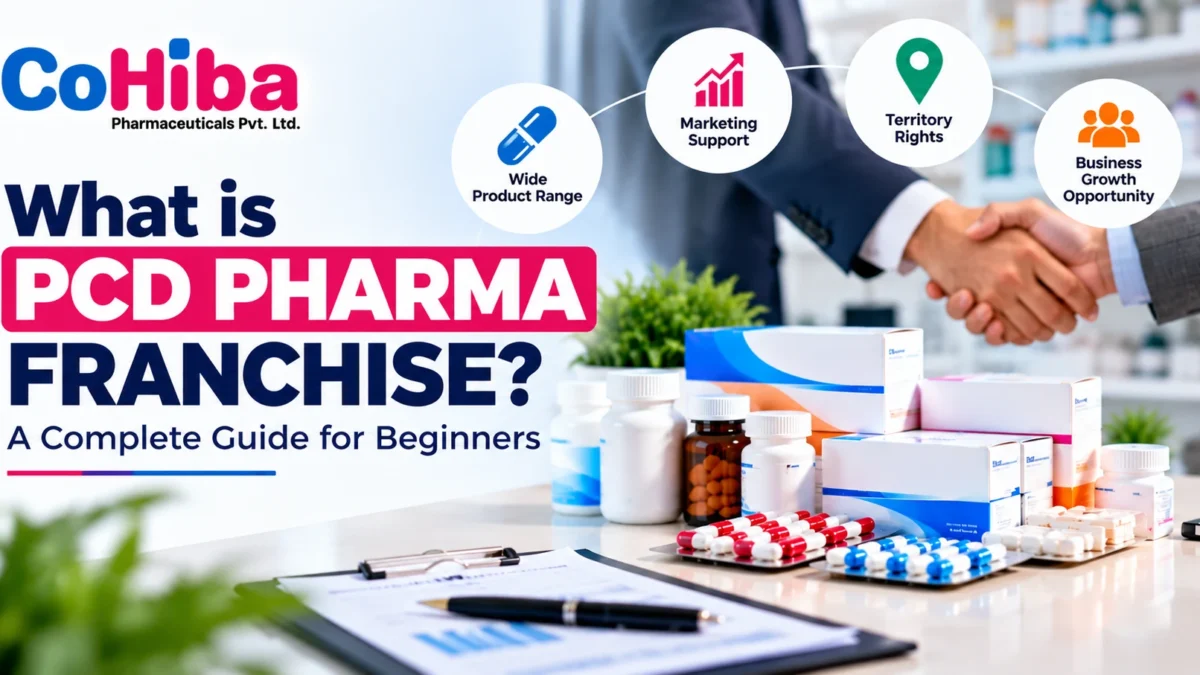
The pharmaceutical industry offers business opportunities for entrepreneurs interested in healthcare distribution and marketing. One business model that attracts distributors, medical sales professionals, and aspiring entrepreneurs is the PCD pharma franchise. But what is PCD pharma franchise, how does it work, and what should you know before starting one?
A PCD pharma franchise is a business arrangement in which a pharmaceutical company authorizes an individual or business partner to promote and distribute its products within an agreed territory. The company may provide a product portfolio, promotional materials, and business support, while the franchise partner focuses on local marketing, distribution, and developing professional business relationships.
This guide explains the PCD pharma franchise model, its benefits, investment considerations, requirements, and how to choose a suitable pharmaceutical company.
What Is PCD Pharma Franchise?
PCD stands for Propaganda Cum Distribution. In the pharmaceutical industry, it refers to an arrangement where a pharmaceutical company grants marketing and distribution rights to a franchise partner for an agreed geographical area.
Under this model, the franchise partner promotes and distributes the company’s pharmaceutical products according to the partnership terms. The company supplies the products and may provide marketing resources or other support, depending on the agreement.
For example, an entrepreneur may partner with a pharmaceutical company to market its products in a particular city or district. The entrepreneur develops the local market, manages orders, and builds relationships with relevant customers, while the company handles product manufacturing or sourcing and supply according to its business model.
The exact responsibilities, territory rights, pricing, and support vary from one company to another.
How Does a PCD Pharma Franchise Work?
Understanding how the business model operates can help new entrepreneurs make informed decisions.
1. Select a Pharmaceutical Company
The first step is to identify a pharmaceutical company with a suitable product range, reliable supply arrangements, appropriate quality documentation, and transparent business terms.
2. Discuss Territory and Business Terms
The company and franchise partner discuss the geographical territory, product selection, order requirements, pricing, payment terms, and available marketing support. Any exclusive or monopoly rights should be clearly documented if offered.
3. Finalize the Product Portfolio
The franchise partner selects products based on the company’s portfolio and the requirements of the target market. Products may include tablets, capsules, syrups, dry syrups, injectables, and other pharmaceutical formulations.
4. Arrange Inventory and Distribution
Once the commercial terms are finalized, the partner places orders and plans inventory, storage, transportation, and distribution in accordance with applicable requirements.
5. Develop the Local Market
The franchise partner works on business development, product promotion, order coordination, and professional relationships with relevant customers. All promotional activities must comply with applicable pharmaceutical marketing regulations.
What Products Are Available Through a PCD Pharma Franchise?
The available products depend on the pharmaceutical company’s portfolio and the terms of the franchise arrangement.
Common product categories include:
- Tablets: Different formulations across approved therapeutic categories.
- Capsules: Products available in various dosage forms.
- Syrups: Liquid formulations for appropriate uses.
- Dry syrups: Formulations that require reconstitution according to product instructions.
- Injectables: Products supplied and handled under applicable storage, distribution, and regulatory requirements.
- Other formulations: Additional categories depending on the company’s product range.
Before choosing products, review their documentation, market demand, pricing, availability, storage requirements, and applicable regulatory conditions.
Benefits of a PCD Pharma Franchise
A PCD pharma franchise may offer several advantages for entrepreneurs who want to enter pharmaceutical marketing and distribution.
Opportunity to Start With an Established Product Portfolio
Instead of developing products independently, a franchise partner can access an existing range of pharmaceutical products from the selected company.
Potential for Territory-Based Business
Some companies offer territory-specific or monopoly arrangements. These may help define the partner’s business area, although the actual rights and restrictions depend on the written agreement.
Marketing and Promotional Support
Depending on the company, partners may receive product literature, visual aids, promotional materials, and other resources to support compliant business development.
Scope for Business Development
Partners can develop local distribution networks and professional relationships over time. Business growth depends on factors such as market demand, competition, product availability, pricing, and operational efficiency.
No Need to Establish Your Own Manufacturing Facility
In a typical PCD arrangement, the partner focuses on marketing and distribution rather than setting up a pharmaceutical manufacturing plant. The company remains responsible for manufacturing or sourcing products as applicable to its business model.
How Much Investment Is Required for a PCD Pharma Franchise?
There is no single investment amount that applies to every PCD pharma franchise. The total cost depends on the pharmaceutical company, product selection, initial order, territory, logistics, and business structure.
Before starting, consider the following expenses:
- Initial pharmaceutical product inventory
- Business registration and applicable licences
- Storage and transportation
- Marketing and promotional activities
- Order management and distribution
- Working capital for ongoing operations
Request a written quotation from the pharmaceutical company and clarify minimum order requirements, payment terms, expiry and replacement policies, and other commercial conditions. A realistic budget should include recurring expenses, not just the first product order.
What Are the Requirements to Start a PCD Pharma Franchise?
The requirements depend on the products being handled, the business structure, and applicable Indian regulations.
Entrepreneurs should check the following before starting:
Business Documentation
Determine which business registration, tax registration, and other documents are required for the proposed business structure.
Applicable Drug Licences
Pharmaceutical wholesale distribution generally requires the appropriate drug licence under applicable Indian drug laws. Requirements can vary according to the activity and products involved. Confirm the applicable requirements with the relevant State Drug Control Department before commencing operations.
Product and Company Documentation
Review the pharmaceutical company’s relevant licences, product approvals, quality documentation, invoices, and other records applicable to the products supplied.
Storage and Distribution Arrangements
Ensure that products are stored and transported according to their labelled conditions and applicable requirements. Certain products may need specific temperature controls or additional handling precautions.
How to Choose the Right PCD Pharma Company
Choosing a pharmaceutical partner is one of the most important decisions in this business. Do not make the decision based only on discounts or initial order value.
Evaluate the following factors before signing an agreement.
Product Quality and Documentation
Check the company’s quality systems, manufacturing or sourcing arrangements, product documentation, and applicable regulatory credentials.
Product Range
Choose a company with products that match the needs of your intended market. A large portfolio is useful only when the products are relevant and consistently available.
Supply Reliability
Ask about order processing, stock availability, delivery timelines, and the process for handling damaged or expired products.
Transparent Pricing and Terms
Understand product prices, minimum orders, payment conditions, territory rights, expiry policies, replacement conditions, and any additional charges.
Marketing Support
Confirm what promotional materials and business assistance the company actually provides and whether these meet your needs.
Is a PCD Pharma Franchise Suitable for Beginners?
A PCD pharma franchise may be suitable for beginners who are willing to learn pharmaceutical distribution, local market research, inventory planning, and business development.
However, it is not a guaranteed-profit business. Entrepreneurs must evaluate local competition, working capital, product demand, regulatory requirements, and the reliability of the pharmaceutical company.
People with experience in pharmaceutical sales or distribution may already understand some aspects of the market. Beginners can benefit from developing a clear business plan and learning the applicable rules before investing.
Why Consider Cohiba Pharmaceuticals?
Entrepreneurs exploring pharmaceutical franchise opportunities can evaluate Cohiba Pharmaceuticals Pvt. Ltd. as a potential business partner.
Before proceeding, review the company’s available product range, product documentation, supply arrangements, territory availability, marketing support, and commercial terms. Discuss your intended market and product requirements directly with the company to determine whether the arrangement suits your business objectives.
The right partnership should be based on transparent terms, suitable products, reliable supply, and a clear understanding of each party’s responsibilities.
Frequently Asked Questions
What is PCD pharma franchise in simple words?
A PCD pharma franchise is an arrangement in which a pharmaceutical company authorizes a business partner to promote and distribute its products in an agreed territory under specified terms.
What does PCD stand for in pharma?
PCD stands for Propaganda Cum Distribution. It describes a pharmaceutical marketing and distribution model.
Is a PCD pharma franchise profitable?
Profitability depends on product pricing, sales volume, operating costs, competition, product availability, and working capital. No company can guarantee profits simply by offering a franchise.
Do I need a drug licence for a PCD pharma franchise?
The licences required depend on the activities and products involved. Pharmaceutical wholesale distribution generally requires an appropriate drug licence in India. Confirm the applicable requirements with the relevant State Drug Control Department before starting.
What is the difference between a PCD pharma franchise and third-party manufacturing?
A PCD pharma franchise primarily involves promoting and distributing a company’s products under an agreed arrangement. Third-party manufacturing involves hiring another manufacturer to produce products for a business under agreed manufacturing and regulatory arrangements. The models serve different business purposes.
Conclusion
Understanding what is PCD pharma franchise is the first step toward evaluating this pharmaceutical business opportunity. The model allows eligible business partners to promote and distribute an established company’s products without setting up their own manufacturing facility.
Success depends on selecting a reliable pharmaceutical company, understanding the agreement, researching the market, planning investment carefully, maintaining compliant distribution practices, and developing sustainable business relationships.
If you are considering entering this sector, evaluate your business requirements and compare potential pharmaceutical partners before making an investment.